
LIP & TONGUE-TIE TREATMENT IN BOZEMAN
Greater Oral Movement Means a Better Quality of Life

The lip and tongue are essential to eating nutritious foods, speaking clearly, and breathing freely throughout the night. When these oral components are restricted because of a lip or tongue-tie, your child can experience significant challenges if left untreated. At Bridger Children’s Dentistry in Bozeman, we offer lip and tongue-tie treatment to release these tissues and encourage greater oral movement.
Why Choose Bridger Children’s Dentistry for
Lip & Tongue-Tie Treatment?
- Laser Dentistry Used for Improved Comfort & Faster Procedures
- Team Approach Used to Create Superior Results for Young Patients
- Parents Provided with Thorough Explanations to Ensure Greater Confidence
What Is a Lip or Tongue-Tie?
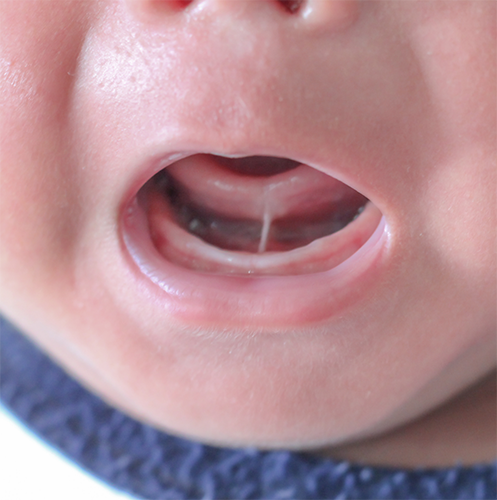
A tongue-tie (ankyloglossia) develops when the lingual frenulum – a ligament under the tongue – is restricted, and movement becomes limited. Similarly, a lip-tie is identified when the labial frenulum – the ligament attaching the upper lip to the gums – is tight. Both can hinder feeding, speech, and oral hygiene and affect growth and development over time.
Why Is It Important to Treat Lip & Tongue-Ties?

An untreated tongue or lip-tie can cause short-term challenges and long-term consequences. Difficulty breastfeeding in infants, speech difficulties in young children, and eating challenges are common symptoms of restricted oral tissues.
As a child grows, the restriction can hinder proper airway development, leading to mouth breathing and sleep issues. Over time, an underdeveloped airway combined with compromised orofacial muscle function can inhibit jaw development and facial growth.
Common Signs of Lip & Tongue-Tie
Early detection of tongue and lip-ties helps alleviate immediate symptoms and avoid potential health challenges down the road. Here’s what parents should watch for among infants and children:
For Infants:

- Challenges with breastfeeding
- Noticeable weight issues
- Signs of feeding distress
- Mothers may experience painful nursing
- Increased risk of mastitis or blocked ducts for mothers
- Potential for reduced milk supply
For Children:

- Speech clarity concerns
- Eating difficulties
- Habitual mouth breathing or snoring
- Increased dental issues, like cavities, crowding, or misalignment
- ADD/ADHD – like symptoms
- Poor performance in school
- Sleep disturbances, snoring, or loud breathing during sleep
- Difficulty with oral hygiene routines
- Challenges transitioning to solid foods
A Comprehensive, Team-Driven Treatment Strategy

For tongue and lip-tie treatment, we collaborate with pediatricians, lactation consultants, ENT’s, myofunctional therapists, speech therapists, and adjunct professionals. The goal of our multidisciplinary approach is to provide a well-rounded care plan that supports your child’s growth and development from all angles.
What Are Our Goals with Lip & Tongue-Tie Treatment?

We have two goals:
- First, to release oral restrictions so your child can enjoy natural functions—feeding, eating, speaking, breathing, sleeping—without effort.
- Second, to create a structural and muscular environment that encourages habitual nasal breathing, allowing your child to grow and develop to their full potential.
Getting Ready for a Tongue-Tie Release
Here are the steps we take to develop a personalized care strategy for every patient:
Comprehensive Health Evaluation: This initial step involves a thorough examination of your child’s health. We focus on oral development, restricted tissue areas, and functional challenges.
Myofunctional Assessment: A more targeted evaluation to gauge tongue mobility, strength, and function. This assessment helps us create a treatment plan specific to your child’s unique needs.
Parental Consultation: Sharing our findings, understanding your concerns, and aligning with you on your child's health goals. This conversation is where we give you the information you need to make decisions that feel right for you, your child, and your family.
Pre-Procedure Guidance: To ensure you and your child are fully prepared, we’ll provide detailed preparation instructions, including a review of any recommended pre-treatment exercises or routines from the myofunctional therapist.
Collaboration with Specialists: This collaboration is tailored to your child’s unique conditions and needs. For instance, a child struggling with breastfeeding due to a tongue-tie might benefit from the expertise of a lactation consultant. Our network can include pediatricians for comprehensive health reviews or speech therapists for children exhibiting speech delays.
Educational Resources: We offer a variety of resources, including online materials, printed guides, and more, to ensure you have a thorough understanding of the procedure, its advantages, and the recovery process.
Emotional Support: We’re here for support and reassurance. We understand what you’re going through, and we want you to feel supported every step of the way.
Customized Care Plan: Your child will receive a personalized treatment plan tailored to their specific needs.
The Tongue and Lip-Tie Release Procedure: Precision and Care

In addressing tongue and lip-ties, Bridger Children’s Dentistry commits to the most advanced and gentle techniques:
Aiming for Functional Improvement

The goal of the procedure is to enhance your child’s oral functions—feeding, speaking, breathing, and sleeping—by releasing restricted oral tissue.
Ease & Comfort with State-of-the-Art Laser Technology

We use cutting-edge laser technology for precision and minimal invasiveness during the procedure. The laser quickens the process, reduces the need for stitches, and facilitates a smoother recovery.
Immediate Post-Procedure Care

Right after the procedure, we provide home care instructions, including exercises to encourage healing. The procedure is remarkably quick, allowing us to return your baby to your arms for immediate nursing, supporting both comfort and bonding.
Our dedicated approach ensures a supportive, understanding environment that focuses on your child's health and comfort every step of the way.
Myofunctional Therapy: Creating a Foundation for Best Results

By addressing the root causes of oral dysfunction and correcting them, myofunctional therapy not only supports the immediate success of tongue and lip-tie releases but also contributes to your child's long-term well-being and development.
Before Surgery: Building Strength & Coordination

Before the procedure, the goals of myofunctional therapy are to:
- Enhance Oral Muscle Tone: Strengthening the muscles in and around the mouth to improve functionality.
- Prepare for a Successful Procedure: Ensuring the oral environment is optimized for the upcoming release, reducing potential complications.
- Improve Breathing Patterns (for Toddlers & Kids): Encouraging nasal breathing to promote better oxygen exchange and sleep quality.
After Surgery: Optimal Recovery & Development

Following the procedure, myofunctional therapy is used to:
- Prevent Re-Attachment: Exercises that aid in the healing process while preventing the reattachment of released tissues.
- Reinforce Proper Oral Functions: Training the tongue and mouth to adopt healthier movement patterns for eating, speaking, and breathing.
- Support Long-term Health: Ongoing exercises designed to maintain the improvements achieved through the procedure and therapy.
A Collaborative Approach to Care

Our myofunctional therapy program is a collaborative effort, involving:
- Specialized Therapists: Experienced myofunctional therapists who tailor exercises to your child’s specific needs.
- Family Involvement: We educate families on how to support their child’s therapy at home, enhancing outcomes.
- Continuous Assessment: Monitoring progress and adjusting the therapy plan as your child develops and their needs evolve.